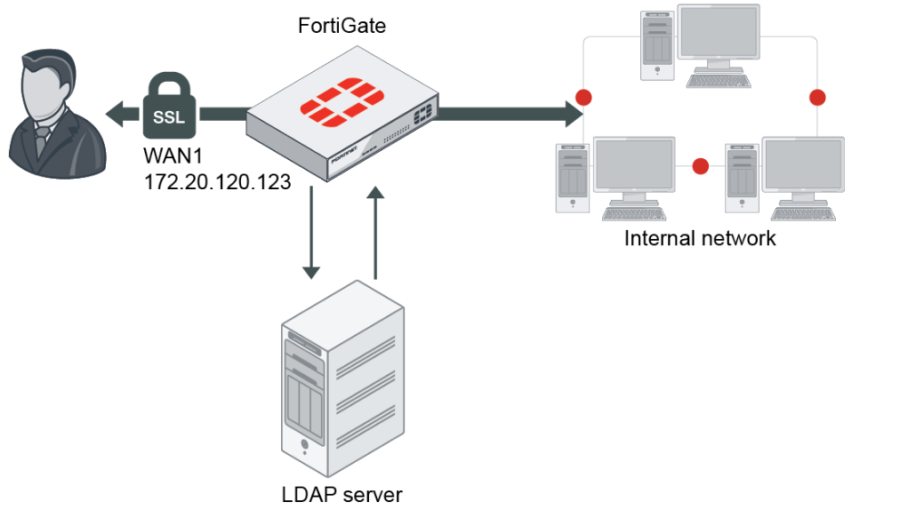
LDAP authentication
LDAP stands for Lightweight Directory Access Protocol, and LDAP authentication follows the client/server model. LDAP helps organizations store and access usernames and passwords within their network and across applications, and verifies those credentials whenever users try to access an LDAP directory or LDAP-enabled systems and applications. It's an essential tool for any business because of how it interacts with directory services, most commonly Microsoft's Active Directory. LDAP is the means of communicating with Active Directory and connecting clients with the information the directory service stores.
How does LDAP authentication work?
A client sends a request for information stored in an LDAP database, along with the user's credentials, to an LDAP server. The server authenticates the submitted credentials against the user's core identity stored in the LDAP database. If they match, the client is granted access and receives the requested information. If not, access is denied.
Configuring LDAP authentication on FortiGate
1. Add the LDAP server
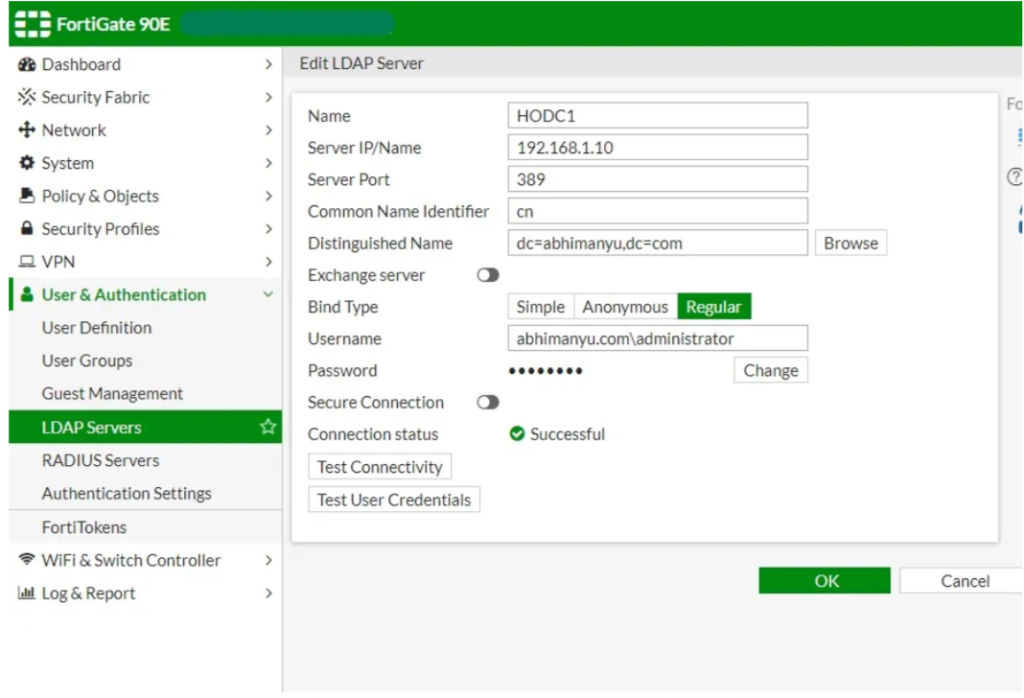
Go to User & Authentication → LDAP Servers and select Create New.
- Enter a Name for the LDAP server.
- In Server IP/Name, enter the server's FQDN or IP address.
- If necessary, change the Server Port. The default is 389.
- Enter the Common Name Identifier (20 characters maximum). The default is
cn, the common name, which is the display name on a Windows LDAP server. - In Bind Type, select Regular.
- In Username, enter the LDAP administrator's name along with the domain (see the screenshot below).
- In Password, enter the LDAP administrator's password.
- For Distinguished Name, click Browse and select the main domain. (Do this after entering the username and password, otherwise browsing won't work.)
- Select OK.
2. Import users from LDAP
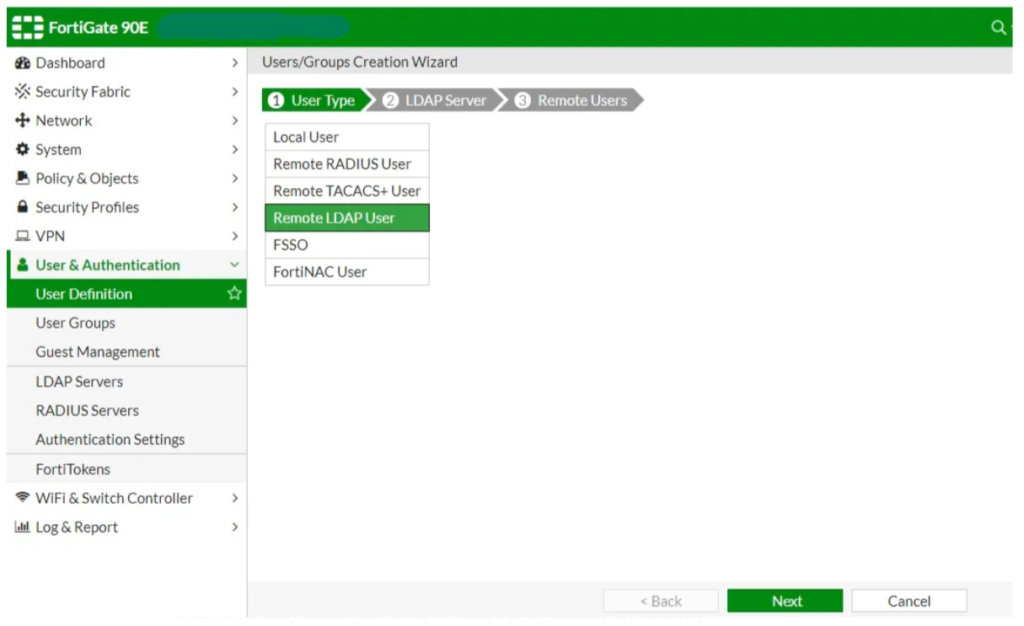
Go to User & Authentication → User Definition, choose Remote LDAP User and click Next.
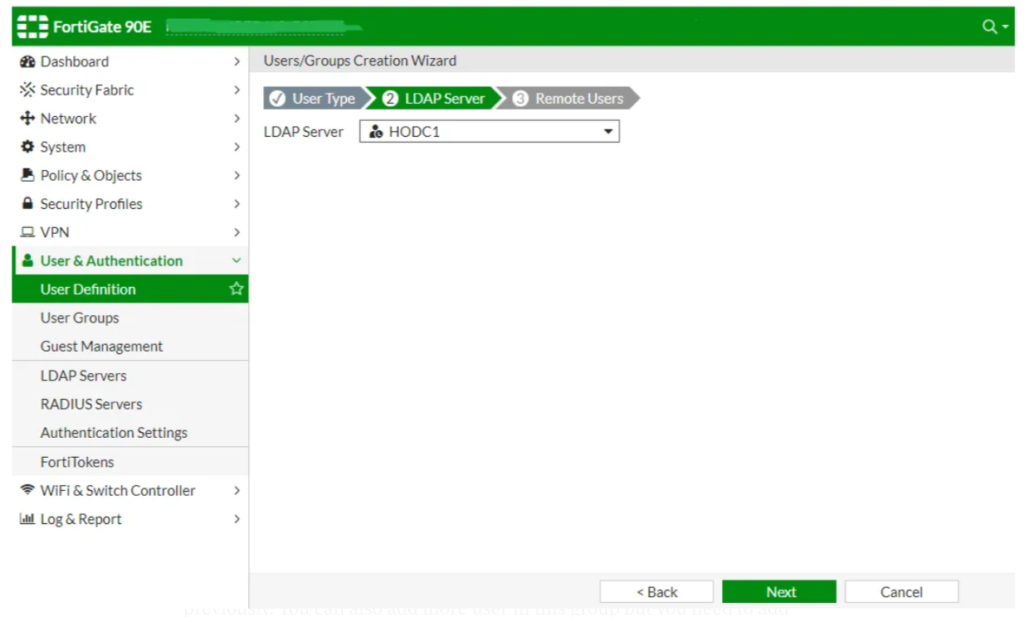
Choose your LDAP server.
You'll see all the users from the LDAP server. Select the users you need and click Submit. (I had already added my user, so there's no Submit button in the screenshot.)
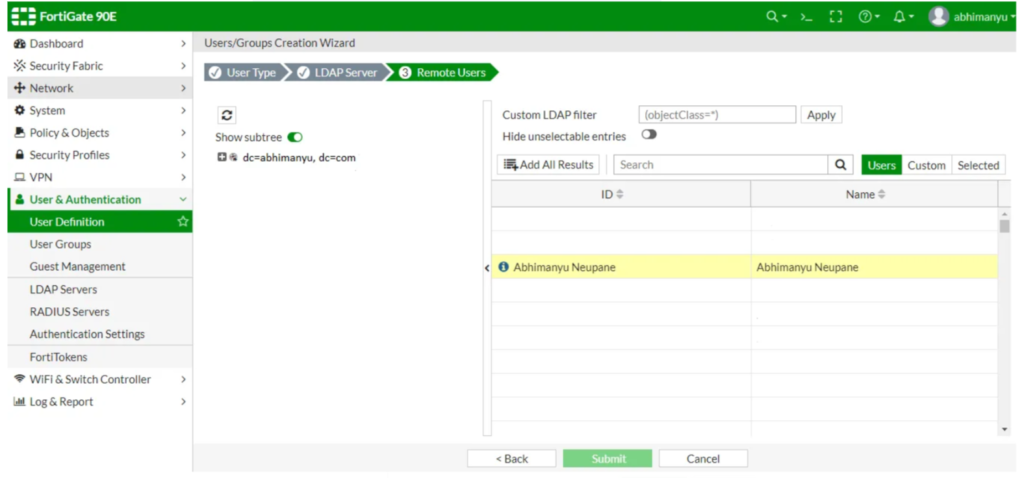
3. Create a user group
Now create a group for a department. I'm creating a group named IT containing the user "Abhimanyu Neupane" that I added previously. You can add more users to the group, but each one must first be added from the LDAP server to the FortiGate. Then select the LDAP server as the remote server for this group.
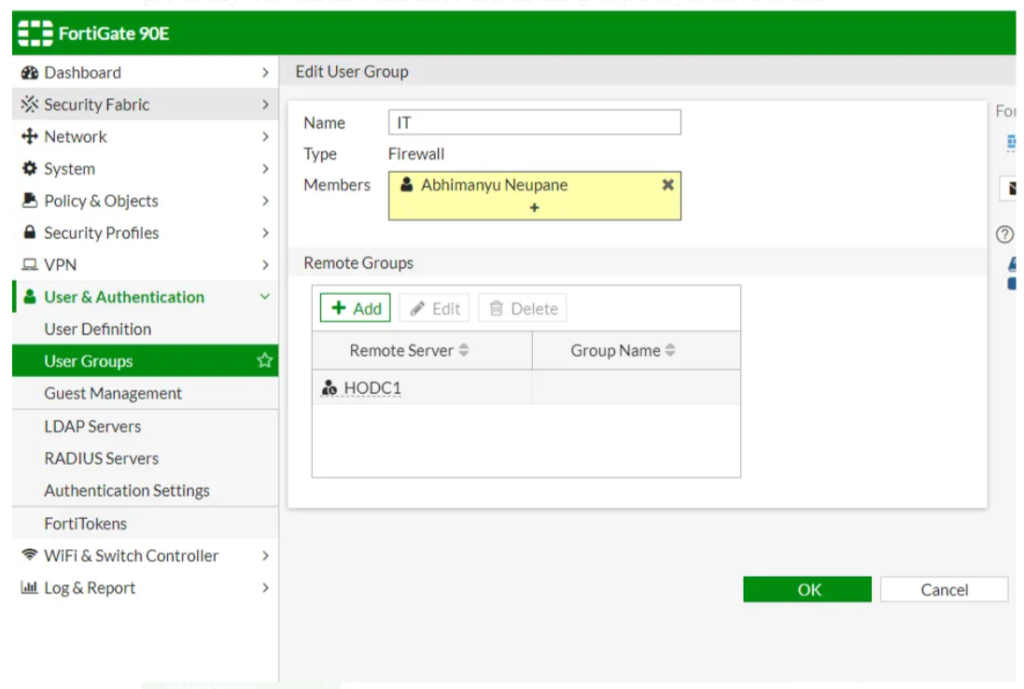
Click OK.
4. Configure SSL-VPN settings
Go to VPN → SSL-VPN Settings and specify the DNS server. Under Authentication/Portal Mapping, click Create New, add the group and select the full-access portal. The group and its portal now appear in the mapping. Select Apply.
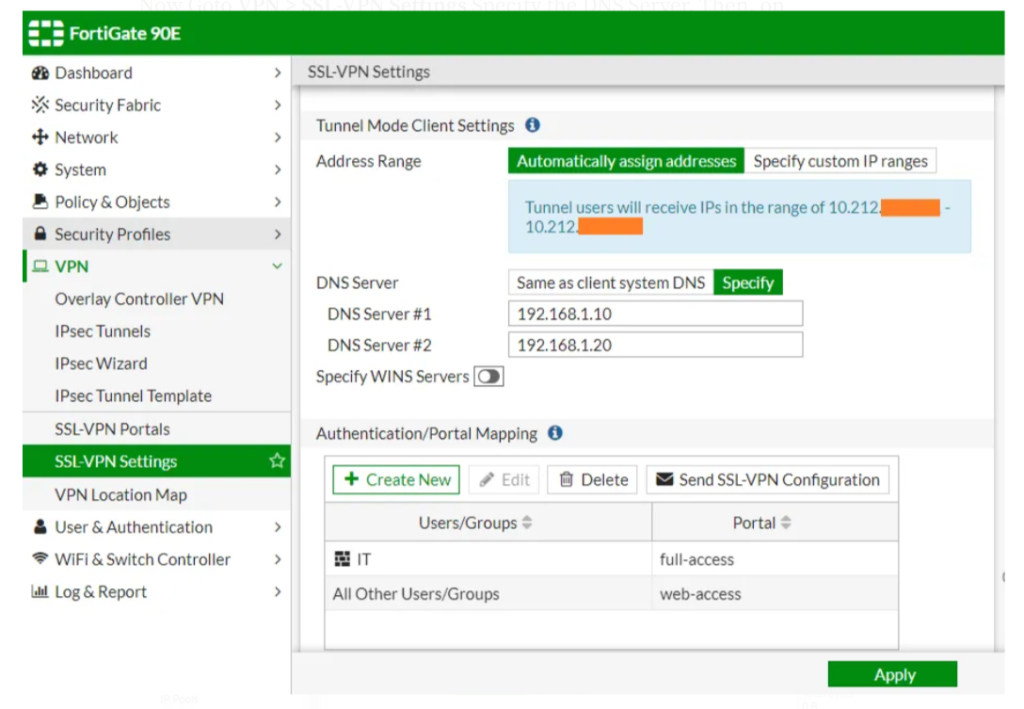
5. Create the firewall policy
Go to Policy & Objects → Firewall Policy → Create New.
- Incoming interface: SSL-VPN tunnel interface
- Outgoing interface: your internet link
- Source: the SSL-VPN address range plus the user group (here, the IT group created earlier)
- Destination: all
- NAT: enabled
Click OK.
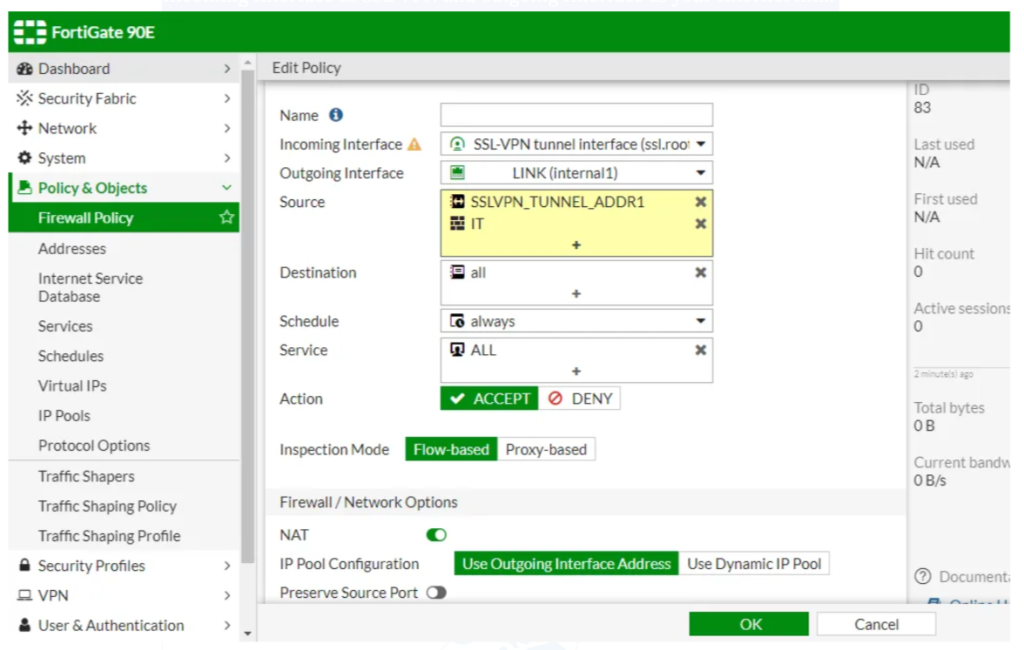

6. Connect with FortiClient
Download FortiClient on your desktop and create a VPN connection using your public IP, then sign in with a username and password from the LDAP server.
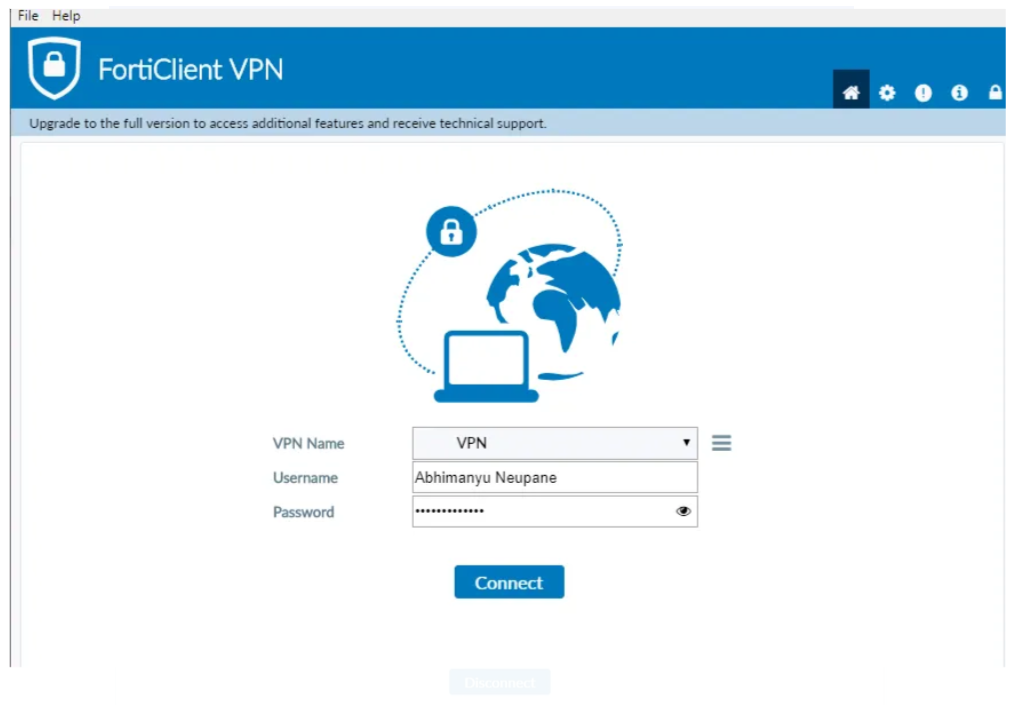
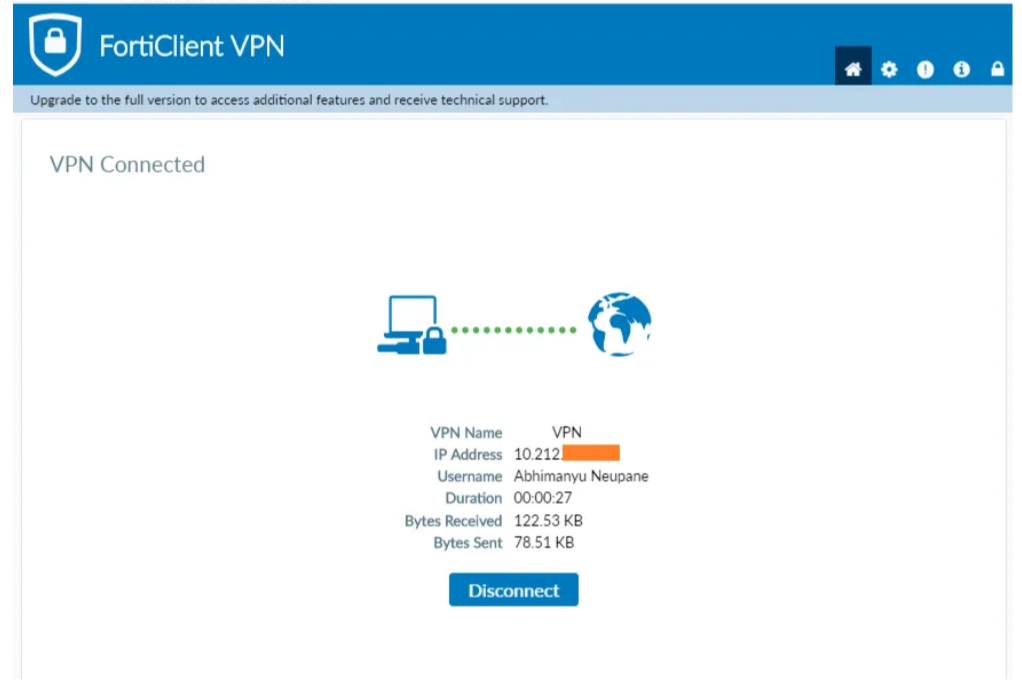
You're now connected to the VPN using LDAP authentication.
Thank you so much!